Helping a newly merged organization work as one.
Making a shared agile framework real, one team, leader, and planning cycle at a time.
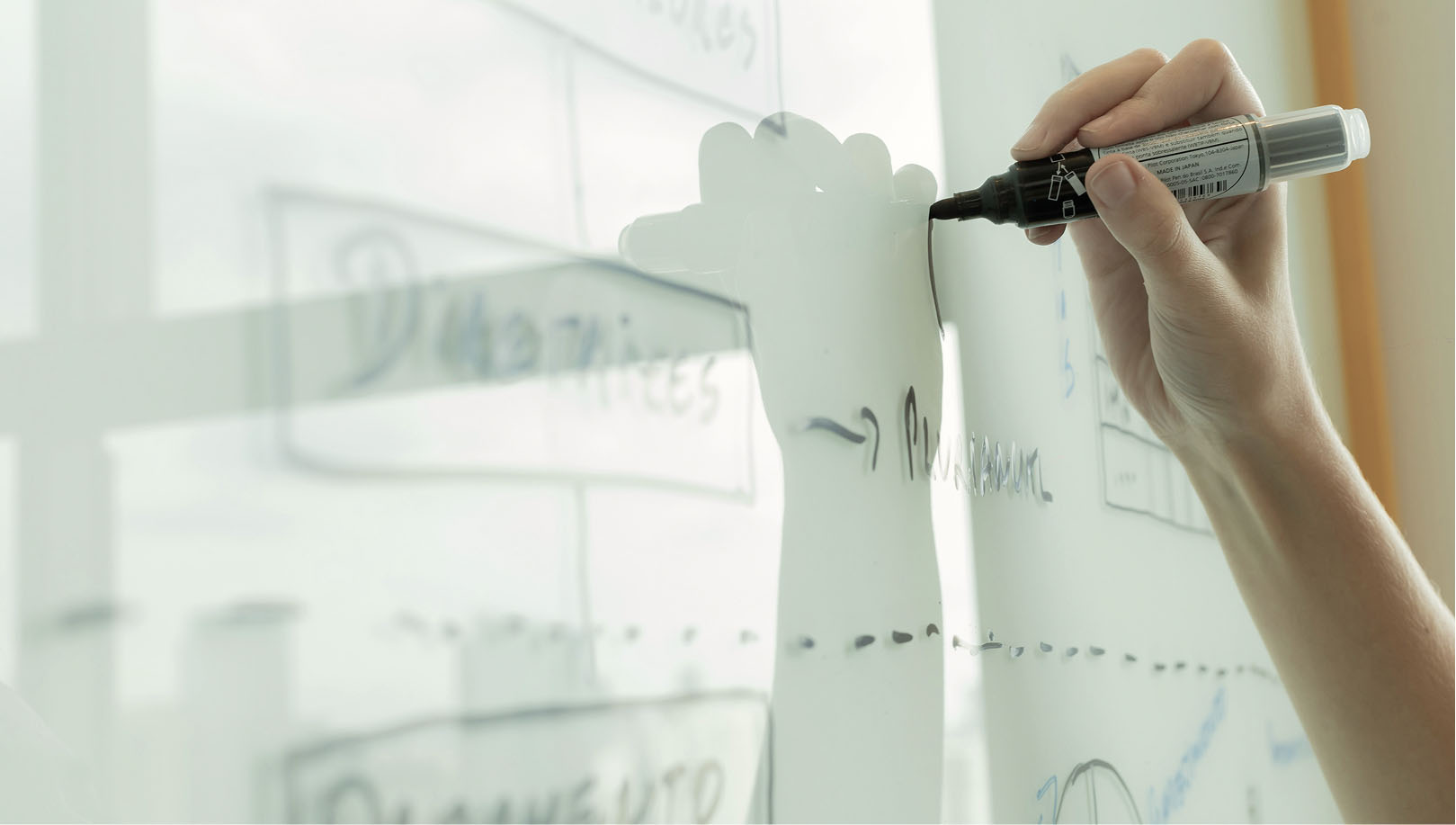
Guiding an org chart of siloed teams with vastly different workflows into one functional unit.
A reorganization at a global footwear and apparel company brought several teams together into one new organization. Each arrived with its own way of working and a very different level of agile experience. Some practiced it well, others barely at all. Leadership decided to move everyone onto one shared framework, the Scaled Agile Framework (SAFe). They needed help making the transition real rather than theoretical.
Our founder led the agile transformation for its first six months, working with the client’s central Agile Transformation Office.
Many starting points, one destination
Teams ranged widely in agile maturity, so no single approach would fit everyone. People were adjusting to new leaders, new peers, and a new structure while being asked to change how they worked. Each team had its own backlog and tools, so no one could see what the organization was working on or what mattered most.
Without a common way to plan, prioritize, and track work, the merged teams would keep operating as separate groups under a new org chart. They’d compete for priorities, duplicate effort, and report progress in incompatible ways.
Ultimately, the framework wasn’t going to stick unless leaders and product owners changed how they led and made decisions.
A partner in agile transformation
The client already had a central Agile Transformation Office that set the maturity standards, but they needed a true partner to bring those standards into the day-to-day for every team member. Our founder led the first six months of the transformation alongside the office, tailoring the plan to each team and combining coaching, facilitation, and training. The goal was to help leaders and teams adopt the new way of working, not to run it for them.

A process specific to the people
We evaluated and surveyed every team to place it on the organization’s four-level maturity scale, then built a transition plan tailored to each team. We trained every team on SAFe foundations, gave leaders training in areas most relevant to their teams, so each leader was uniquely equipped for their context. We planned and facilitated the organization’s first joint planning session and moved all work into a single tool.
The outcome
One organization, one view of the work
The organization moved up a full level on the four-level maturity scale in six months. The merged teams held their first joint planning cycle, and leadership was able to have a single view of progress. Teams began customer mapping and product development work through facilitated sessions, and a program was put in place for future training.
1
full maturity level gained (of four)
6
months from kickoff to result
1
joint planning cycle for teams that had never planned together
1
system of record for all work
The framework for success already existed in this situation, thanks to the Agile Transformation Office. We just needed to tailor those standards for the specific context we were working with. Our role combined coaching, facilitation, and training: helping leaders and teams adopt the new way of working that would stick well after we left.
Our approach and processes gave these teams a common language for working together, but what made it successful was investing in the leaders and product owners in front of us. We helped a group of teams that had just been put together truly become one organization.
Org design defines structure (roles, reporting lines, and team design), while an operating model defines the specifics of how teams plan, prioritize, and make decisions. The case study above demonstrates how our client used org design to combine multiple teams, but an operating model was necessary for the teams to work as one unit.
Empowered decision making gives stakeholders authority, clarity, and skills to decide without having to escalate every issue. In this transformation, we trained leaders in servant leadership and product owners in product ownership, so the team leadership could carry decisions and sustain the change.
A good consulting partnership works inside the client’s structure with clear roles, rather than running in parallel to it. In this scenario, the client’s Agile Transformation Office set the maturity standards, and we tailored and ran the transition within them.